



For many affiliate marketers, the story looks the same.
You start sending paid traffic.
A few sales come in.
At first, it feels promising.
Then you check the numbers.
What you earned from those sales barely covers the cost of advertising — or doesn’t cover it at all.
This usually leads to familiar conclusions:
- “Ads are too expensive.”
- “I need better targeting.”
- “This platform doesn’t work.”
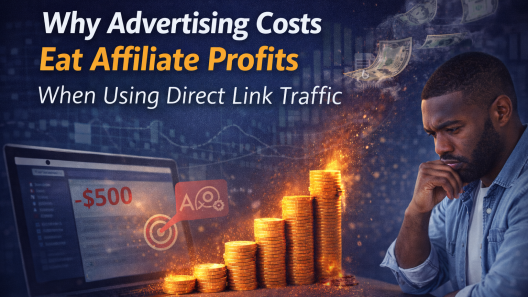
But when advertising costs consistently eat affiliate profits, the issue is rarely the ad platform.
It’s how traffic is being used.
Why Paid Traffic Feels More Painful Than Organic Traffic
Organic traffic is forgiving.
Some visitors arrive curious.
Some are already problem-aware.
A few are ready to buy.
Paid traffic is different.
Every click has a cost.
Every mistake is amplified.
When paid traffic fails to convert profitably, it doesn’t just reduce margins —
it reveals structural weaknesses in the system.
The Common Pattern Affiliates Experience
This is how it usually plays out:
- Ads are launched
- Traffic goes directly to the affiliate offer
- A few sales happen
- Spend increases to “optimize”
- Profit disappears
The affiliate assumes:
“If I can just tweak ads or lower CPC, this will work.”
But the problem existed before the first ad was ever launched.
The Core Issue: You’re Paying for Traffic That Isn’t Ready
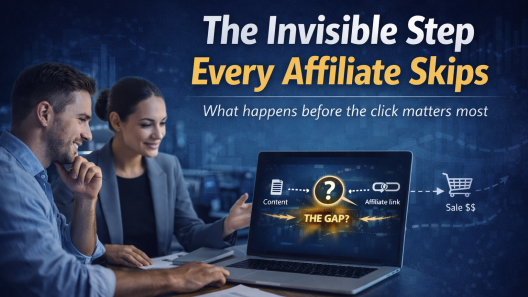
When traffic is sent directly to an affiliate offer, something critical is missing.
The visitor has not yet:
- fully understood the problem
- recognized it as relevant
- reached a clear decision
The affiliate link becomes the first moment of intent.
With organic traffic, this mistake is hidden.
With paid traffic, it becomes expensive immediately.
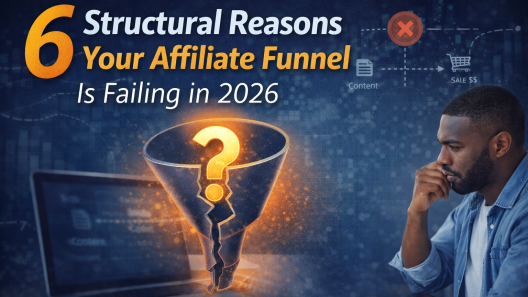
Advertising doesn’t break the funnel.
It exposes it.
❌ Bad Example: Direct Linking With Paid Traffic
An affiliate runs ads that say:
“This tool helps you improve X. Click here.”
Traffic lands directly on:
- a sales page
- a product explanation
- a checkout-focused offer
The visitor is expected to:
- understand the problem
- trust the recommendation
- evaluate the solution
All at once.
A few people do.
Most don’t.
✅ Better Structure: Paid Traffic After the Decision Is Prepared
A better system doesn’t send paid traffic straight to the offer.
Instead, paid traffic enters a pre-decision step.
This step:
- explains the situation clearly
- makes the problem real
- helps the visitor recognize themselves
- prepares intent
Only after the decision exists does the solution appear.
Paid traffic becomes leverage instead of pressure.
Why This Gets Worse When You Scale
At low spend, a few ready buyers slip through.
When spend increases:
- unprepared traffic multiplies
- hesitation increases
- conversions don’t scale proportionally
Revenue grows slowly.
Ad costs grow consistently.
This creates the illusion that advertising “doesn’t work.”
In reality, the decision is happening too late.
Why Better Targeting Doesn’t Fix This
Many affiliates try to fix this by:
- narrowing audiences
- improving creatives
- testing platforms
These optimizations help only marginally.
No amount of targeting can replace:
- context
- understanding
- decision preparation
If the structure is broken, better traffic just arrives faster.
Funnels Don’t Reduce Ad Costs — They Protect Them
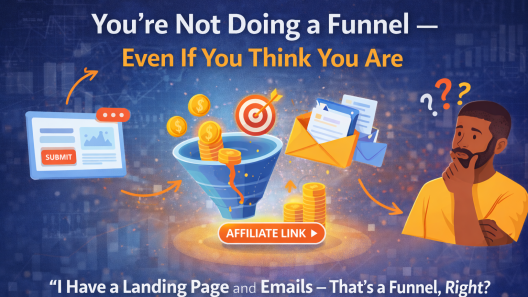
This is where funnels are often misunderstood.
Funnels are not designed to:
- push harder
- sell faster
- manipulate decisions
They exist to protect traffic spend.
A funnel creates the space where:
- the problem is understood
- trust is formed
- the decision is made before the offer
Without that structure, advertising turns into leakage.
A Simple Diagnostic Question 🔍
If advertising costs are eating your affiliate profits, ask:
- Does anything meaningful happen before the offer?
- Is the problem clearly understood before the click?
- Is there a decision point before redirection?
If not, traffic isn’t the problem.
Structure is.